Showing posts with label Seven Wastes. Show all posts

Wednesday, August 15, 2012

Seven Wastes: Rework

Continuing with our Seven Wastes series, I present to you our next topic, Rework.  As you can probably already guess, rework by definition means doing something over again.  This concept came along with the ideals of factory production, because having to redo a manufactured item is not only expense, but it wastes time and resources.

Imagine if you were a shift supervisor on a factory floor and 1 out of every 10 widgets you produced needed to be remade.  Think of all the wasted material that goes into fixing something that should have been right the first time.  Since you now have workers dedicated to repairing or reworking the products you should have gotten right the first time, you are struggling to balance your shift's quotas and will fall behind this month.

Most of us are not shift supervisors, but we can learn some important lessons while performing our own projects.  Say you are proud of your handiness and have decided to replace your defunct dish washer (on a side tangent, I know that actually having a dishwasher was a huge achievement in my life).  You rush through the installation, don't read the directions, and your dishwasher now has issues and is leaking on the floor.  Because you did such a poor job installing it the first time, you need to buy new connectors and other materials and will need to re-install the whole mechanism again.  How do you think you would feel at that moment?  If you had just put in the time to do it correct the first time, you would have overall saved yourself more time and annoyance.

Examples also occur in the white collar world.  Imagine you are an analyst at a company that depends on your reports for key industry information.  You decide to leave a little earlier or maybe stop working and fly through the most recent batch of reports.  Because of your sloppy work, your boss gets angry with you and makes your reproduce them all over again.  This rework now demands that you stay after work to produce it right.

Often times, it pays to take your time and do good work the first time around.  Not only will you save yourself time, but you will also succeed more throughout your life.

Wonderful Moment of the Day - Finishing another section in my book.

Wednesday, July 18, 2012

Seven Wastes: Motion

Continuing with the third installment of our ever-so-popular Seven Wastes series, I now present to you the concept of wasted motion.  Traditionally, motion waste often occurs when someone is on a production line.  Imagine if you were processing widgets (this just means any generic item), and that you had to bend over, pick up the widget, turn to your left, place the widget in the machine, and then press a button.  Now doing this once may not seem like such an effort, but what if you did this 5 days a week, for 8 hours a day.  Over time, that little additional step of bending over and turning can add up to some significant time wasting.

Being a good supervisor, you see that this is in fact some wasted time and decide to have the widget at waste level so all the employee has to do is turn right, pick up the widget, turn left, and place it in the machine. You have now eliminated the step of bending over which took about 2 seconds per widget. If a normal person can perform this task 20 times a minute for seven and a half hours a day (got to keep in mind the lunch break), then you have a task that takes up about 5 hours of their day. By implementing that new turning task, you eliminate 1 second out of the step, you saved your company an additional 2 1/2 hours of work a day. You can see how these little simple tasks multiplied over hundreds of employees can add up to some significant savings.

Now how does this example apply to your life?  Consider the time you spend in your life at work/home/recreation, and think of the many tasks you perform.  At work, you might have to staple a whole bunch of documents together, or you might actually work on a factory line.  At home, you might go through a complicated orchestra of movements in your pursuit of a delicious dinner.  Think of the process you go through to complete any task, and ask yourself if this is the best method to achieve the desired outcome.  It could be that if you just move where your cutting board is located, you could save yourself a few minutes each day for something else.  These little minutes can add up and significantly impact your life.

Completing a movement more efficiently is not necessarily the goal I want you to think about.  Instead, get in the habit of always asking if you could be doing something better or more efficiently.  This is a very practical and important skill if you are to succeed in maximizing your potential.  Analyzing your motion skills is a much more tangible example to more complicated issues such as analyzing your stage in life.

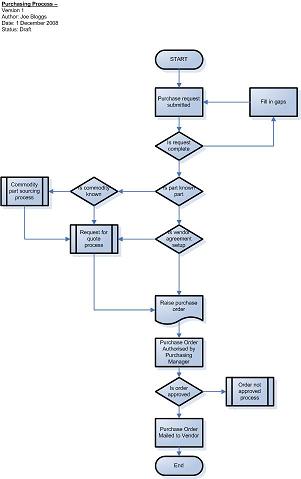
For a process analyst, the key tool they use to identify their movements is called a process map.  A generic example is demonstrated in the picture.  I don't expect your to complete one for your day-to-day steps, but it's helpful to see how this works.  In the end you should always be questioning what's going on around you, and strive for better.

Wonderful Moment of the Day: Having a nice soaking rain storm after about 6 weeks of no rain.

Wednesday, July 4, 2012

The Seven Wastes: Over Processing

A Fancy and Expensive Compost Box
Continuing with our Seven Wastes series...I bet you thought I forgot...I'll be diving into the next topic which is "Over Processing".  Traditionally, over processing in the manufacturing world consists of doing more work than the customer asked for.  For example, a customer orders a basic Toyota Corolla SE, but instead you make an LE model complete with power everything, leather seats, and automatic air fresher.  All this time and effort you just put into making a luxury Corolla (if there is such a thing) is now wasted, because the customer is not going to pay more for all these features.  Now the dealer might have to deal with a whole other type of waste "Inventory", but I'll save that for another post.


Needless to say, the car example was just to illustrate a point. Unfortunately, over processing can occur in our own daily lives; most typically with allocating our efforts to particular projects. Understanding how much effort to put into a particular project is very important to maximize your own potential. Here's another example in my own life to wet your palate. Recently, I had the opportunity to build a brand new composting box for my backyard. Composting is a wonderful way to dispose of organic waste, reduce trash in land fills, and improve your own gardens, but I digress. There are hundreds of different types of compost bins on the market right now, and if your not careful, you could spend a couple hundred bucks on something that is essentially making dirt. I decided to go with the, "I'm going to just build one" method and next had to figure out exactly what I was going to use to build with. I searched online and came across a number of sites that listed the best types of compost bins for construction, and the best building materials. Chicken wire, cedar boards, fancy paint, all could make a compost box look really nice, but in the back of my mind something seemed awry. Finally it hit me, this was something that was going in my backyard out of site and essentially forms an industrial function. Why would I spend any significant amount of my hard earned cash on this project.

My plans for this uber cheap compost box consisted of about 10 12 feet long pieces of pine board I bought at a local construction reuse place for a total of $5. I cut them all up, and slowly assembled them into a nice box with 1 inch gaps throughout to allow airflow. Besides my own time, the total construction costs was that measly $5 I spent on building materials. The point I'm trying to make here is that I understood that this needed to be a cheap project and the accuracy of this project was only needed to be adequate. This allowed me to finish rather quickly and move onto the next phase of my life.

Taking the counter point on this whole "how much effort should I put into things" is the idea that you should put quality work into everything you do. I'm all for this, but if your boss is asking you to do 10 different projects, you need to understand which ones are the important ones and how much effort to put into them. There are only so many hours in a day, and frankly, you'll be much happier when you fine tune this time management skill.

Remember that a few minutes of thinking through problem and proper categorization in your life could save you much more time in the future.

Wonderful Moment of the Day: Seeing the biggest bull frog I've ever seen ribbit at my Parent's house.

Friday, June 22, 2012

The Seven Wastes: Transportation

Awhile back, I had the opportunity to work in Washington DC for about 2 years.  It was very exciting and I was but a bleary eyed young P-Money.  I was so proud to say I worked in the Nation's Capital and I definitely got to see some pretty cool stuff.  From bowling with Congressmen, to watching political convoys or marine one pass bay, the excitement never ceased to amaze me.

The first apartment I had was sharing a bedroom with a roommate in a 5 bedroom townhouse in Georgetown.  My rent at the time was $900/month.  To put this into perspective, there were 7 other people living in this house and sharing just 1 kitchen and 2 bathrooms.  Total rent = $4500/month...ouch!  Georgetown wasn't even that convenient, and I had to walk awhile while also taking at least 1 bus.

Next, I moved to a suburb in Maryland close to the metro in Rockville.  Luckily, with this apartment, I shared a 3 bedroom condo, 2 baths, with 2 other guys for about $2100 per month.  Not to shabby considering I still had about 30 minutes worth of walking on top of a 30 minute metro ride.

My Old Rockville Apartment on the bottom floor.
Finally, for that reason and many more, I had enough of the big city life and instead moved to a smaller city in the north (some might consider the "rust belt").  I got an efficiency downtown for $500, and walked to work (about 20 minutes).  When I think about it, switching cities to a lower cost of living and reduced commute allowed me to have much more of my life back.  On average, my DC commute was 1 hour per trip, 2 hours per day, 10 hours per week...about 20 days of my life per year after vacations, and would have amounted to  2.2 years of my life if I had maintained this commute until I retired.  I was even one of the lucky ones in DC!

It always amazes me how much time people can waste just through their daily commute, which brings me to my next series: "The Seven Wastes" which focuses on the lessons learned via the Toyota Production System or (TPS).

The first one pertains to my own wasted time from the past, and that is Transportation.  Basically, every time a product is moving between places, it is wasted time because nothing productive is being done.  Eliminate the transportation costs while keeping all other costs equal, and you will save big bucks.

This concept directly applies to our own lives.  In the world of expanding suburbs, and exurbs, the less than 30 minute commute is becoming a thing of the past.  Since moving to my current city, I bought a house within the city limits, next to a subway stop in which I get free fare, and still have a commute less than 30 minutes.  I even live in a very nice area.

You have to ask yourself how much of your life are you going to waste for the sake of commuting.  It's true that some of us simply don't have much of an alternative, especially if your spouse works in the opposite direction.  However, it pays to do the homework and consider transportation routes to and from work.  Google maps does a magnificent job calculating routes by car, public transportation, and even walking.  Consider these concepts the next time you decide to move.

Wonderful Moment of the Day - Doing some manual labor and feeling the satisfaction of hard days work accomplished.